Cork Skeptics

Promoting Reason, Science & Critical Thinking in Cork City & Beyond


2 Comments

Identifying “baloney” in everyday life

We are beset, these days, with people making claims about products, services and viewpoints that have little or no scientific backing or evidence. Websites, advertisements and magazine articles sometimes contain extravagant claims about products and services that are guaranteed to change your life, make you rich, or provide therapies that are beyond the means of modern medicine. Often, clever persuasion techniques are used that sound convincing at first sight, but which do not make much logical sense on closer inspection. These techniques are called “Logical Fallacies”: flawed arguments used to persuade the unwary. Logical fallacies are often used simply to distract people away from a more rigorous examination of a claim. The following are some logical fallacies in common use.

Appeals to Emotion: Emotional appeals are the mainstay of many baloney merchants. By linking their ideas with pleasant, soothing imagery, or associating their opponents’ ideas with disgusting or threatening pictures, the expectation is that the reader is will be persuaded to accept the proponent’s point of view. There are many examples of this, particularly when the topic is a “hot button” one, such as abortion, childhood vaccinations, vivisection, climate change or nuclear power. Appeals to emotion are used throughout the advertising industry as a means to associate products with well-being and health.

Appeals to Celebrity: A key strategy among many advertisers of nonsense is to associate their products with well known personalities, both living and dead. A testimonial or photo-opportunity with a celebrity is hugely desirable, but where this is not possible, it can be just as effective to insert an image of Einstein, Mahatma Gandhi or a famous hollywood film star. Celebrities have huge public appeal and can drive enormous interest in products and services. They are rarely experts, however, and are prone to the same biases and mistakes as the rest of us. A celebrity endorsement does not necessarily indicate that a product or service is any good.

“Magic” words: Seemingly scientific words regularly appear in the the literature and websites of nonsense pedlars. These words include “vibrations”, “energy”, “life-force”, “quantum”, “magnetic” and “psychic”. While they are meant to convey a sense of how their procedures work, they are usually used in contexts that make no sense from a scientific perspective. Energy, magnetism, vibrations and quantum have very specific meanings for scientists. They are often used inappropriately when applied to the many healing or therapeutic solutions on offer in the mainstream media. Instead, the words are a short-hand for magic: a word used to describe the inexplicable.

Too Good To Be True: Some claims are breathtakingly sensational. According to some, a cure for all types of cancer is available right now, others promote get rich quick schemes, while yet others claim that free energy is in our grasp. These are extraordinary claims that sound almost too good to be true. While we would all like silver bullet solutions to our problems, the reality is often more difficult and complex. When great breakthroughs do take place, they come under heavy scrutiny and are surrounded by an enormous media fanfare, both positive and negative. In this context, claims by single proponents require extensive cross-checking and verification before they can ever be accepted. As the saying goes: “if it sounds too good to be true, it probably is”.

Black Or White: A Black Or White claim, also called a “false dilemma”, is one that limits alternative explanations to a very small number of possibilities, often just one or two. If a strange light is seen in the sky, it MUST be a UFO. If a strange object is seen on the road at night it MUST be a ghost. Other possible alternatives are not even mentioned. False dilemmas are also used to convince people of a viewpoint by presenting it as the only alternative to the mainstream view. An example is where homeopathy is promoted where normal medicines have significant side effects. Just because there are problems in mainstream medicine doesn’t mean that homeopathy is an effective alternative.

Conspiracy: Sometimes we hear proponents of strange claims make allegations about Big Medicine or government or a capitalist elite suppressing their ideas for their own nefarious purposes. While conspiracies do sometimes take place, it is almost trivially easy to resort to a conspiracy theory to explain a setback or an unforeseen circumstance. Other possibilities, such as misfortune, incompetence and indifference, are often more likely explanations.

None of these arguments, in themselves, can prove that a person is talking baloney. Indeed, worthwhile, serious ideas may also be supported by poor reasoning. However, if a proponent only uses logical fallacies to support their products or viewpoints, then you should be sceptical of the claims they are making.

This article appeared in the Cork Independent blog on 4 October 2012.


Leave a comment

The 15 Minute Baloney Detection Kit

Image

As part of Culture Night in Blackrock Castle this weekend, I talked about a number of techniques we all should be on the look out for when confronted with strange claims that don’t seem to make much sense. These techniques included strong emotional appeals, the use of celebrities, “magic” words, claims that seemed to be too good to be true, and the “black or white” fallacy, where only two options are presented even though other alternatives may exist. These are just some examples of what are called Logical Fallacies – you can find more fallacies discussed in the website below.

Click on the link to go to the Logical Fallacies website

I also spoke about the dangers of anecdotes and testimonials and why we can’t always rely on our memories or perceptions to explain what we might have witnessed. Finally, I contrasted scientific claims to baloney claims, outlining the hard work that has taken place to provide a reliable understanding of the world around us.

Further reading: 

The following books are worth a look if you are interested in finding out more about science and baloney.

Mistakes Were Made (But Not By Me) – Carol Tavris & Eliot Aronson

Bad Science – Ben Goldacre

Trick or Treatment – Simon Singh & Edzard Ernst

The Demon Haunted World – Carl Sagan

Flim Flam! – James Randi

Why People Believe Weird Things – Michael Shermer

Bad Astronomy – Philip Plait

Paranormality – Richard Wiseman

Internet Resources

The Skeptics’ Dictionary

Doubtful News

Skeptic Magazine

James Randi Educational Foundation

Snopes.com

Bad Astronomy

Podcasts

The Skeptics’ Guide To The Universe

Skeptoid

Skeptics with a K

Skeprechauns

Videos

Storm (Tim Minchin)

The Strange Powers of the Placebo Effect

The Problem With Anecdotes


1 Comment

Curiosity, Faces in the Stump, Cancer Quackery and Kinesio Tape – Our Roundup for August

Many thanks again to Reg Murphy who gave us a great talk on modern art, its impact on the world, and some of the fascinating characters involved. Reg tackled an enormous subject and digested it down to a very clever, understandable reading of the subject.

We recorded the meeting on Google Plus, and a rough version is already on YouTube: It needs some straightening out, but we’ll have that video up on the website soon.

At yesterday night’s meeting we covered a few interesting stories from the last month. Here are some links for further reading.


Mars Curiosity landing

On August 5th, the Mars Science Laboratory(aka “Curiosity Rover”) landed on Mars. It is the largest object ever to land on Mars and the complexity of its landing was breathtaking. If you haven’t yet seen the “Seven Minutes of Terror” video, do it now.

The Curiosity project is an excellent example of the power of science. Had the project team made one incorrect assumption about the atmosphere and environment on Mars, Curiosity would now be a heap of scrap strewn over the red planet. Science doesn’t know everything, but what it does know is pretty damn cool.


Stumped

Another example of pareidolia, where our minds see familiar patterns where none exist: a face of Jesus was seen in a tree stump in a cemetery in Belfast. Our friends in Belfast Skeptics have a brilliant take-down and some further examples of pareidolia.


Cancer Quackery in the Indo

A health supplement in the Irish Independent had the Internet up in arms on Thursday. Once of the stories related to a man who believes that he could use dowsing to identify and ward against cancer. Brendan Murphy from “Positive Energy” says that a phenomenon known as “geopathic stress” can impact on your susceptibility to cancer. According to a blurb on Murphy’s website:

Geopathic Stress is mainly caused by narrow paths of water about 200 – 300 ft (60 – 90 meters) below ground (also on top of mountains). The narrow water path creates an electromagnetic field, which distorts the earth’s natural vibrations, as these pass through the water. It is in particular the 7.83Hz (cycles per second) which are beneficiary and which we have lived with for millions of years. This is also the optimum part of the Schumann waves and Alpha vibrations. It has been confirmed by NASA the 7.83 Hz vibrations are incorporated into spacecrafts, otherwise the astronauts could only live in space a short time. Certain mineral concentrations, fault lines, moving underground plateaux and underground cavities can also disturb the natural earth vibrations. Strong Geopathic Stress can cause the body’s vibrations to rise as high as 250Hz. The U.S. scientist George Lakowsky confirmed in the thirties that humans (as well as animals) have less chance of fighting bacteria, viruses and parasites above 180 Hz, so they love humans and animals that vibrate at high levels.

What the what now?  NASA you say? Vibrating parasites? Pseudo-scientific nonsense wrapped up in scientific sounding language, you say? Well I never… The problem with promoting cancer quackery such as this is that it preys on some of the most vulnerable people on the planet, diverting them from proper medical care, to (in this case) a guy with a pair of coat hangers. It would be funny if it were not for the stuff he claims to be able to treat.


Head kicking for Jesus

Back to Northern Ireland, a preacher by the name of Todd Bentley is planning to visit Portadownnext month. Bentley also claims he has a cure for ailments such as cancer. Yes, you got it: a good kicking. We’re pretty sure Bentley is just a cheezy showman with a mouth the size of a football pitch, but UK MPs are being lobbied to ban him from visiting just in case he gets the urge to kick a few sick people on the side. Here are some samples of his live performances:

http://www.youtube.com/watch?v=97WA46li9s8


Colour Me Stupid

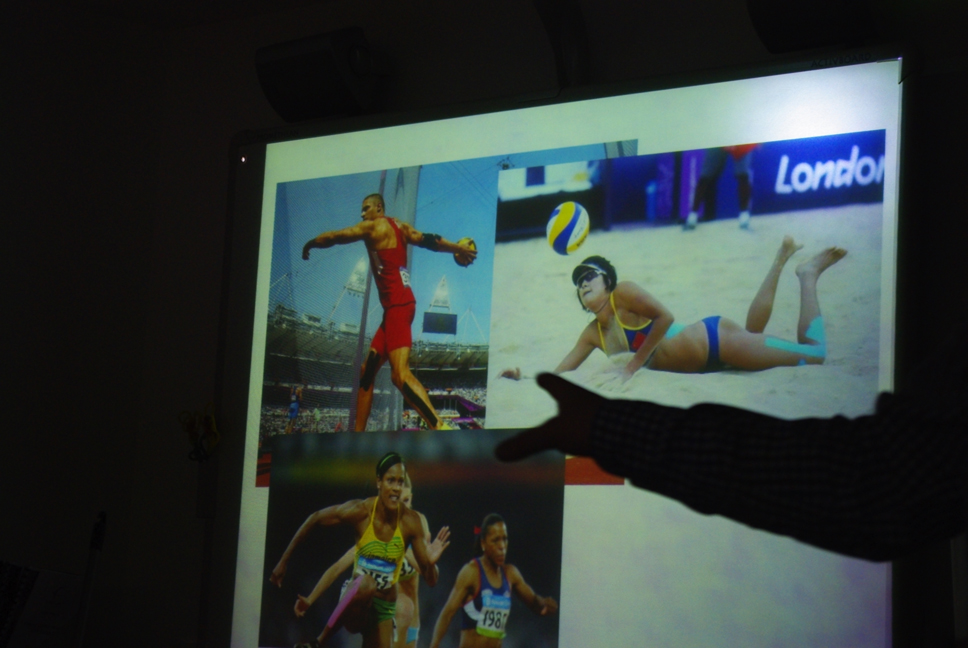
Many people have commented on the brightly coloured tape attached to the skin of Olympic athletes during London 2012. It turns out that this is Kinesio Tape: magic bandages for gullible athletes. Kinesio tape has a long history, originating from a Japanese chiropractor in the 1970’s. What it doesn’t have is much proof to support the claims that are being made. And so it goes: goodbye Power Balance wristbands, hello Kinesio tape. There’s a lucrative industry in bilking sports people with magic rubbish.


Leave a comment

Alternative medicine – good skeptical reading

In their talk on Saturday, Steve and Ben mentioned a number of books that are worth a read if you are interested in finding more about the research behind alternative medicine. Here are some of the books mentioned. Direct links to Eason’s and Amazon are provided if you are interested in purchasing these books or e-books directly.

Bad Science by Ben Goldacre

This excellent book exposes poor and unscientific practices, no matter where they are to be found. Ben Goldacre pulls no punches and spreads his net very widely indeed. His targets include the cosmetics industry, homeopaths and quacks of all sorts, pharmaceutical companies, and so-called TV “experts” such as Gillian McKeith. It’s an excellent primer on how to distinguish the best medical practice from the worst.

Trick or Treatment by Simon Singh and Edzard Ernst

 Simon Singh and Edzard Ernst consider the claims of alternative medicine from a scientific perspective, looking at the studies that have been performed on many well known alternative therapeutic practices such as chiropractic, acupuncture, homeopathy and herbal medicine.

Autism’s False Prophets by Paul Offit

Paul A. Offit, a national expert on vaccines, challenges the modern-day false prophets who have so egregiously misled the public and exposes the opportunism of the lawyers, journalists, celebrities, and politicians who support them. Offit recounts the history of autism research and the exploitation of this tragic condition by advocates and zealots.

Deadly Choices by Paul Offit

In “Deadly Choices,” infectious-disease expert Paul Offit takes a look behind the curtain of the anti-vaccine movement. What he finds is a reminder of the power of scientific knowledge, and the harm we risk if we ignore it.

Mistakes Were Made (But Not By Me) by Carol Tavris and Elliot Aronson

This terrific book opens the lid on self-deception and cognitive dissonance: how we are hard-wired to justify our decisions and actions, even when it is plainly obvious to others that they were wrong, misconceived and sometimes malevolent.

Please let us know if you know of other books and we will take a look. We hope to do a book swap for books that are worth reading at forthcoming Cork Skeptics meetings, so please bring along your favourite books to our next meeting and feel free to take another one in return!

If you have other suggested titles, we will publish more reading suggestions soon.


Leave a comment

So you think you own your own body? Follow up from last night.

Many thanks again to Muireann Quigley for her very informative talk last night. We were treated to some of the defining stories around body-part ownership and  patenting, from Henrietta Lacks’ incredible “HeLa” cells, to the case of Charles Byrne’s giant skeleton, to the Greenberg / Canavan Disease case among the Ashkenazi Jewish community. She outlined the costs of body parts on the open market and explained how the law is able to assign property rights to body parts. From her talk it is evident that rights of ownership are not well established. It was a fascinating talk, and anybody going to her talk in Dublin tonight are in for a treat.

In the meeting we also spoke about a case of cholesterol denial in West Cork, and I posted up some links to references that may be of use when investigating strange medical claims. Here are the references again.

Science Based Medicinehttp://www.sciencebasedmedicine.org/

The Skeptic’s Dictionaryhttp://www.skepdic.com/

Respectful Insolencehttp://scienceblogs.com/insolence/

Bad Sciencehttp://www.badscience.net/

The Quackometerhttp://www.quackometer.net/

DC’s Improbable Sciencehttp://www.dcscience.net/

Finally, we discussed the case of Sanal Edamaruku in India, where his investigations into a Catholic miracle have lead him to be accused of blasphemy. There is a petition open to have his case thrown out.

Our next meeting is scheduled for July 14th in Blackrock Castle. More details soon.


13 Comments

Skepticism – the wider issue

In a few years time, there may well be no rhinos left alive. And when I say no rhinos, I do not mean “none left in the wild”. I mean none in the zoos either. The captive animals will have been killed too. The reason for this is an insatiable desire among some people for rhinoceros horn – a material thought by some to possess magical healing powers. It’s really just a mass of keratin – the same substance that your hair and fingernails is made from. There is good money to be made from this trade. International criminals have stopped at nothing: butchering animals all across Asia and Africa, even breaking into museums to steal horns for the black-market. Some say it’s worth more per gram than cocaine. In pursuit of an odious delusion, we are witnessing the imminent extinction in our lifetime, of an animal, variants of which have existed on this planet for 33 million years.

This is what you get when critical thinking is left to one side and blind belief trumps patient scientific inquiry. Where unsupported and uncontested beliefs thrive, dreadful scenarios can play themselves out, right down to the last animal standing.

We don’t have to go as far as the traditional medicine markets of China or Vietnam to find such strange and destructive beliefs. There is a woeful lack of rational thinking all around us. Every day, uncritical and pseudo-critical thinking sends people down fruitless, and sometimes dangerous cul-de-sacs. It has lead to poor decisions, bad investments, unfair treatment of others and unquestioning acceptance of leaders who should never have been given the whiff of power.

Skepticism is often dismissed by critics as an obsession with the weird and outlandish, or a cynical repudiation of personal beliefs that are comforting to many and threatening to no-one. This is missing the point. While individual issues might easily be dismissed in this manner, the wider issue is a lack of critical thinking and an almost systematic undermining of the role of science and the value of evidence throughout society.

As people who value rational thinking, we get exasperated by the alternative medicine industry, not just because the products they advertise are usually useless, but because they have made a virtue out of ignorance. They are more interested in marketing and subjective hearsay than they are in standards of evidence. Their passionately held rationalisations have damaged any kind of sensible discourse on the subject, making it difficult to distinguish valuable therapies from the nonsensical ones, of which there are a great many examples.

We get frustrated by religionists because, while they seek to shine a critical light on everyone and everything, their own beliefs are beyond the pale of honest inquiry. They make a virtue out of unquestioning acceptance of dogma, pretending to all the world that this is a good thing, when it most certainly isn’t.

We despair of elements within the media, who forsake information dissemination for controversy. In their attempts to create debate where the balance of evidence is overwhelmingly on one side, people are lead to the conclusion that all science is simply a matter of opinion. Propaganda, forcefully and passionately delivered, stands in the ascendant while reality based content seems to survive on the margins.

We should also question our current education system, that, while often rigorous with the accuracy of its curriculums, seems to fail in providing so many students a basic underpinning in how to distinguish fact from fantasy, or how to critically assess new information. The products of this failure are all around us.

Of greatest concern are the politicians, who are happy to distort science in order to appeal to their power base. Rather than lead, they follow; allowing popularity to take precedence over scientific discovery. The results can be catastrophic, as much needed legislation from the environment, to healthcare, to basic human rights, are held up, buried, obfuscated and condemned in equal measure. They have done much to trivialise science and make a virtue out of ignorance.

We live in a world where many people are manifestly ill-informed about all sorts of issues. A large section of society is happy to spend their incomes and savings on spurious magical therapies, as if we were still living in the Dark Ages. Others allow unsupported stories to inform their moral philosophy, leading in turn to tacit support for prejudicial and discriminatory actions. Thousands of people believe in wild conspiracy theories, preferring to believe that astronauts didn’t land on the moon, or that the 9/11 bombings were concocted by an elite cabal within the US Government. There is an appetite for denial, whereby tortured analyses, intellectual bottlenecks and special pleadings are expected to be equated with a cool-headed understanding of the evidence. Many others are simply content to allow arguments from authority or other such logical fallacies to inform all their important decisions.

In the light of such a fog of make believe and dissimulation, there is a need for people to fly the flag for rational thinking. Science and scientific thinking needs to be elevated, both as a means to understand the world and also as our best tool to solve the problems of the present and the future. People need to appreciate the value of evidence – correctly gathered and analysed evidence – in making claims about reality. Fantasy and make-believe have their place in society, but not when it comes to policy making and critical decisions about our future.