Some people think science is all about wild-haired, bespectacled geeks in lab coats, holding beakers and marvelling at their latest fantastic breakthroughs. Then there are the people who believe it to be some sort of church, where immutable truths are held in sacred reverence. Many consider it to be just a type of opinion, prone to change its mind with the same regularity as teenage fashion. In the worst case, it is condemned as an enterprise of pure evil, determined to foist dangerous chemicals, foods and drugs on a compliant public. All of these are lazy, small minded caricatures of what science is.
Put simply, science is about trial and error. Scientists test ideas against reality; dumping the failed ideas and retaining the successful ideas for further scrutiny. Ideas that survive multiple, repeated testing gain greater validity. Over time, the best ideas become part of the consensus of…
“Whoever makes two ears of corn, or two blades of grass grow where only one grew before, deserves better of mankind, and does more essential service to his country than the whole race of politicians put together” – Jonathan Swift (Gulliver’s Travels)
Humans exist because plants exist. Plants have shaped our world, allowing animal life to evolve and they continue to have an overriding influence on our society. From the food we eat, the medicines we take, the beer we drink and the clothes we wear; plants make life possible on Earth. Indeed, Ireland has built two of its largest industries – agriculture and tourism – on its green image.
In this talk, EoinLettice—lecturer in Plant Science at the School of Biological, Earth and Environmental Sciences at University College Cork —will examine the importance of plants in society and even unearth some intriguing mysteries which can be solved with a knowledge of plants. What caused the Salem witch trials? Why are the British a nation of tea-drinkers? And what caused the ‘Mutiny on the Bounty’?
Eoin will discuss the present place of plants in culture and society and discuss the idea of ‘plant blindness’ – the inability to see or notice plants (and their importance) around us. Given the crucial importance of plants to critical global problems like food security and climate change, we ignore plant blindness at our peril.
About The Speaker: Eoin is a lecturer in plant science at the School of BEES, University College Cork where he teaches a diverse range of subjects including plant biotechnology, plant pathology, soil science, biological control and organic horticulture.
His main research focus is the biocontrol of plant pests using sustainable approaches. He’s also interested in science communication, running the Communicate Science blog and novel methods in teaching and learning.
************
This talk is part of Culture Night Cork 2013. It is open to the public, and free to attend. It starts at 7:00pm on Friday 20th September.
Last week, the Sunday Independent published a curious article about a new water technology that purported to be the “greatest breakthrough in agriculture since the plough”. This alone set my baloney detector into overdrive, and I quickly tweeted about it on our Cork Skeptics account. The story quickly went viral, catching the attention of the sceptical community in the UK and Ireland, appearing on various blogs, forums and news aggregators and getting some media attention too.
The article outlines a “groundbreaking technology” that, when applied to plants, increases their size and output, making them largely disease resistant too. What is this technology, you might ask? Water. Or more specifically, water energised by radio waves. Like, who’d have thought of that?
The article fails to convince on a number of levels. First of all, there are the exaggerated claims. Not only does the writer refer to the technology as the…
Autism is a fascinating subject, steeped in rumour, mystery, misconceptions and myths. Tannice Pendegrass firstly aims to take you through different definitions of autism, cultural representations and the results of her survey, asking over 700 people about their perceptions of what causes and treats autism (spoiler: we don’t know and, currently, nothing).
The second part of the talk focuses on ‘the bad’ and ‘the ugly’. The part most skeptics will probably be most interested in. Tannice will briefly cover the MMR scandal, but this is not the main focus of her ‘bad’ or ‘ugly’ section: the subject that Tannice reserves the most ire for is the toxic and sometimes downright dangerous treatments many children must endure. Asking the question ‘what’s the harm?’ has never been more important.
The third part of the talk is for ‘the good’ – it focuses on ABA or Applied Behavioural Analysis; the gold standard in Autism treatment. Through a whirlwind journey (to fit in the format of a SitP talk) Tannice will explain what ABA is, how it’s used and the evidence behind it. From Kim Peek (the inspiration for rain man) to Jenny McCarthy (an anti-vaccination campaigner), this talk will give you a broad overview of Autism, Autism treatments and why cultural representations of Autism are usually wrong. You’ll also find out why a horse died when he was being treated in a chamber normally reserved for divers suffering from the bends.” Bio:
Tannice Pendegrass is the Assistant Editor of The Skeptic Magazine (UK) and responsible for running Guildford Skeptics in the Pub with a Cesium fist. Tannice’s brand of skepticism is focused around alternative medicine and false claims of an ability to converse with the dead. Her specialist Credible Hulk subject is the bogus link between Autism and the MMR vaccine. Tannice is also the Treasurer and the Press Officer for the newly formed South East Skeptics’ society.
Our meeting:
This meeting takes place at 8pm in Blackrock Castle, Saturday March 16th. The call will take place over Skype.
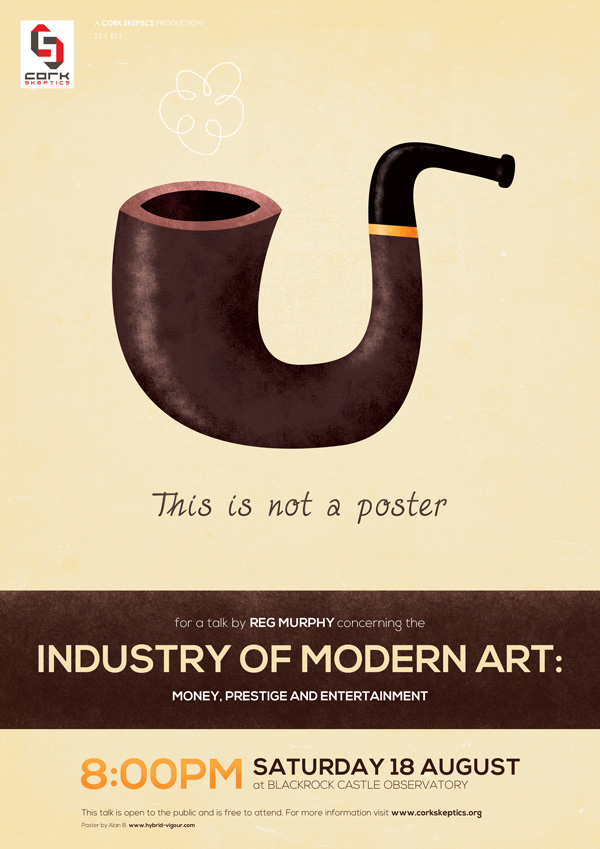
Our next meeting will take place on Saturday 18th August, at Blackrock Castle Observatory, starting at 8.00pm. The talk is by Cork Skeptics member Reg Murphy, and promises to be a fascinating look behind the industry of modern art. Reg has a degree in Fine Art from Limerick School of Art and is an avid art enthusiast. Reg has supplied an outline of the talk below.
In this talk I won’t deal with lofty questions like: what is art? What is the meaning of art? etc.; these are subjective issues best left to philosophers and not truly accessible to skeptical analysis. What I will talk about is Modern Art’s essential relationship with Money, Prestige and Entertainment. Modern Art, for better or worse is a big worldwide industry which employs tens of thousands, entertains millions, generates billions (literally), and causes (occasionally) mass trauma and outrage. Decisions concerning it often go to the highest levels of Government and it is often used as branch of diplomacy.
In a heavily illustrated slide lecture, I hope to give a fun and irreverent (i.e. free of jargon) overview, providing a highly condensed history from French Impressionism to the current day, revealing:
The Artists: Where do I start? The Collectors: Visionaries, fools or prudent investors? The Dealers: Smarmy charlatans or the hand maidens of Culture? The Critics: Vindictive failed artists or heroic cheerleaders? The Media: Vulgarians or honesty reflecting public bafflement? The Curators: Elitist snobs or a sincere desire to stimulate the public? The State Galleries: A waste of public money or vastly important tourist draws? Government: Arts spending; the role of Cultural heritage and national prestige.
Most importantly, and perhaps not widely appreciated: How visual art became a mass spectacle (a very modern phenomena).
All these elements will build up a picture of the current contemporary art scene and will show that despite stupidity, hubris and greed, the public are the winners and are in fact, greatly enriched.
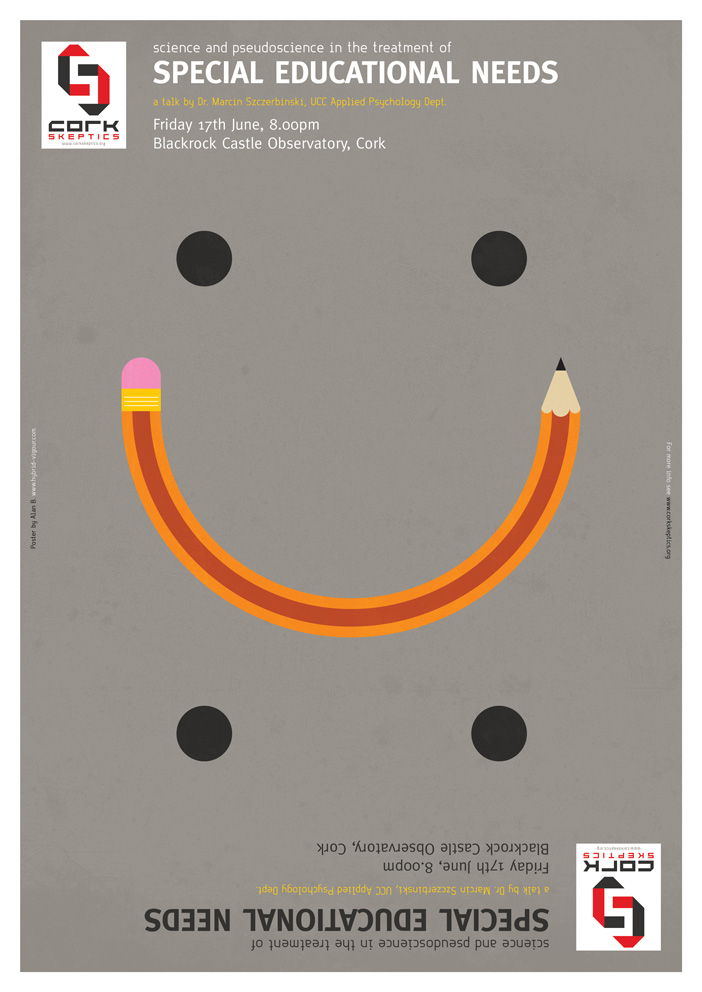
Science and Pseudoscience in the Treatment of Special Educational Needs
Friday 17th June at Blackrock Castle Observatory, Cork
Some children experience significant difficulties in aspects of their psychological development, making it hard for them to achieve their full potential inside the mainstream school curriculum. Those developmental difficulties can be elusive—hard to diagnose or even define precisely—and hard to treat. Naturally, there is no shortage of those who claim to have found the solution—wonderfully simple and effective— and who try to sell it to (often desperate) parents, teachers, psychologists or speech therapists. What these consumers need is the ability to critically evaluate the therapeutic products that are being marketed to them.
In this talk, Dr. Marcin Szczerbinski of the UCC Applied Psychology department will offer a brief overview of special educational needs—their symptoms and causes—as currently understood by the mainstream scientific community. The talk will cover subjects such as dyslexia, dyscalculia, dyspraxia, ADHD and autism. He will then suggest some rules of thumb that will allow us to evaluate the competing therapeutic proposals, helping to differentiate those that are plausible from those that are almost certainly a waste of time.
The boundaries between evidence-based therapy and its dubious alternatives can be fuzzy. Even bona fide scientists are often guilty of over-selling the genuine remedies they offer. Dr. Szczerbinski will discuss the effectiveness of widely known therapies, such as Educational Kinesiology and Brain Gym as part of the talk, questioning how effective they are in reality.
About The Speaker: Dr. Marcin Szczerbinski is a psychologist, a graduate of the Jagiellonian University, Kraków, and University College London. He has taught psychology and research methods at the University of Sheffield, before moving to the UCC earlier this year. He researches developmental dyslexia, among other things.
Venue & Time: This talk will begin at 8.00pm on Friday 17th June, in Blackrock Castle Observatory. Everyone is welcome and the talk is free to attend. Please see our Skeptics In The Castle page for directions to the Castle.


 Wooden Sculpture (CC image via EpSos.de)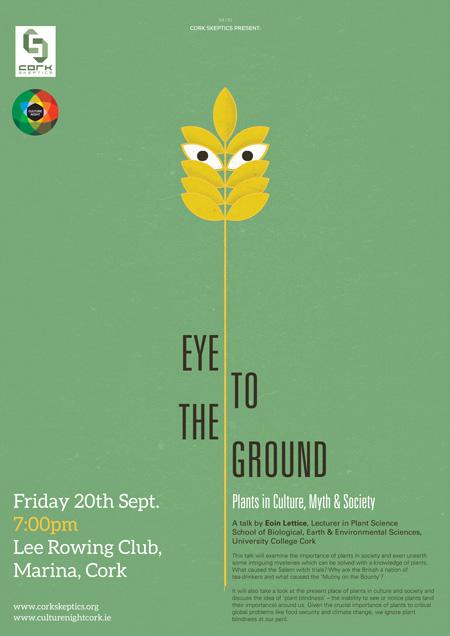

 Cork Skeptics